A AM Air Conditioning Repair
Eagle, WI · 53119 Not Cooling · Warm Air · Leaks · Replacement

AC Contactor Replacement in Eagle, WI Near Me

Outdoor unit buzzing, not starting or running when it should be off? A worn contactor is a routine local fix.

Home AC Repair Calls
Local AC Companies
Symptoms Talked Through
Repair or Replace Advice

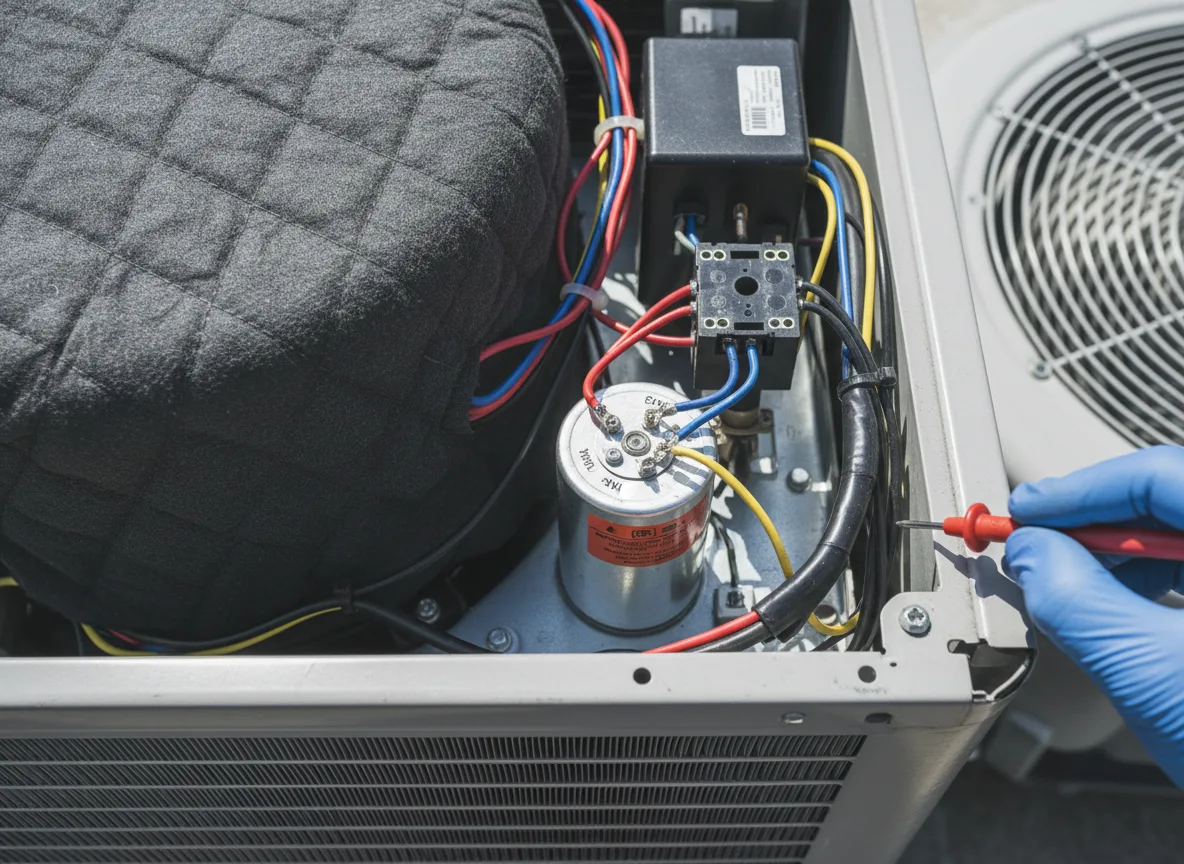
The contactor is a small relay in the outdoor unit that does a big job. When the thermostat calls for cooling, it sends 24 volts to the contactor's coil, which pulls the contacts closed and sends 240 volts to the compressor and fan. When that part wears out, the outdoor unit won't start, chatters, or worse, won't shut off. AC contactor replacement is a routine repair, and we connect you with a local AC company in Eagle, WI that handles it.

Signs of a failing contactor

  • A buzzing or chattering sound from the outdoor unit when it should be running
  • The indoor blower runs but the outdoor unit stays quiet
  • The outdoor unit keeps running even after the thermostat is turned off
  • Visible black burn marks or pitting on the contact points
  • Ants or other insects packed into the contactor (they are drawn to the electrical field and can jam it open)

A unit that won't shut off is the one to take seriously. A contactor welded closed runs the compressor nonstop, freezes the indoor coil, and can damage the compressor. Turn the power off at the disconnect and call. The ice side of that problem is covered on our frozen evaporator coil page.

Why contactors wear out

Every time the AC starts, current arcs across the contact points. Over thousands of cycles that arcing pits and burns the surfaces until they no longer make good contact, or stick together. Systems that short-cycle, starting and stopping often, wear contactors faster. Heat, dust and insects add to it.

What the tech checks

The tech shuts off power, inspects the contact surfaces, and measures voltage across the contactor coil when the thermostat calls. Low or missing 24-volt signal points back to the thermostat circuit, covered on our thermostat repair page. A good signal with a contactor that won't pull in, or contacts that are badly pitted, means replacement. Since contactors and capacitors often fail together, the tech will usually test the capacitor while the panel is open; see our capacitor replacement page.

Safety

The contactor sits on the line side of 240-volt power. Even with the thermostat off, the line terminals are live unless the disconnect or breaker is off. Pushing the contactor in with a stick to test it is a common DIY move, and it's also an easy way to get hurt or damage the compressor.

What drives the cost

The part is inexpensive; most of the cost is the service call. Single-pole and double-pole contactors and their amp ratings vary by unit. If the contactor burned up because of a deeper problem like a failing compressor drawing high amps, that gets addressed too. Call (337) 568-0294 and we will connect you with a local AC tech in Eagle, WI.
How booking works

Four steps to getting your AC looked at in Eagle, WI

01

Tell us what it's doing

Humming outside, warm air from the vents, ice on the line, water on the floor. The details help the tech come prepared.

02

We connect you

We line you up with a local AC company covering Eagle, WI and you set the visit time directly with them.

03

The tech diagnoses it

Meter on the capacitor and contactor, gauges on the service ports, a look at the filter, coil and drain.

04

You decide on the fix

The tech explains what failed and the options. Repair, replace or think it over, the call is yours.

Coverage

AC Repair Across Eagle, WI

Central air service calls across the neighborhoods and ZIP codes around Eagle, WI.

ZIP codes we serve

53119
AC Contactor Replacement in Eagle, WI

AC repair FAQs

Frequently asked questions about AC repair

Questions we hear most about AC Contactor Replacement in Eagle, WI.

Ask about your AC
How much does AC repair cost in Eagle, WI?
<p>Nobody can give an honest number without seeing the system, and anyone who does over the phone is guessing. What drives the bill is the part that failed, whether it is a universal or brand-specific part, refrigerant type and amount if any is needed, the time of the visit (after-hours and weekend calls usually carry a higher fee), and how hard the equipment is to reach. Capacitors and contactors sit at the low end. Compressors and coils sit at the high end.</p>
Is it worth repairing an AC unit that is 15 years old?
<p>It depends on what failed. A capacitor, contactor or fan motor on an older unit is usually still worth fixing. A failed compressor or a leaking coil on a 15-year-old system, especially one that runs on R-22, is where many homeowners decide the money is better spent on a new system. Ask the tech how the rest of the unit looks, not only the broken part. Our <a href="/services/ac-replacement">AC replacement page</a> covers how to weigh it.</p>
Can I just add refrigerant to my AC?
<p>Refrigerant doesn't get used up. It circulates in a sealed loop, so if your system is low, there's a leak. Adding more without finding the leak means you'll be low again, sometimes in weeks, sometimes in a year. Overcharging a system that wasn't actually low damages the compressor. Handling refrigerant also requires federal EPA training and recovery equipment. A tech should check the charge with gauges first, then talk about <a href="/services/ac-refrigerant-leak-repair">finding the leak</a>.</p>
How often should a central AC get a tune-up?
<p>Once a year, ideally in spring before the first heat wave. In hot climates where the AC runs most of the year, some homeowners book twice. A real tune-up includes rinsing the condenser coil, testing the capacitor, checking the contactor, reading refrigerant pressures, measuring temperature drop and flushing the drain. Change your filter every one to three months in between. Catching a weak contactor or capacitor in April beats losing cooling in July.</p>
Can a local AC tech in Eagle, WI repair a ductless unit?
<p>Many AC companies that work on central systems also service ductless split units, since they use the same basic parts: a compressor, capacitor, fan motors, refrigerant lines and a condensate drain. Common ductless problems are clogged drain lines, dirty indoor blower wheels and failed communication boards. When you call, mention that it's a ductless system and the brand if you know it, so we can connect you with a company that works on that type. Call (337) 568-0294.</p>

Book AC repair

AC Acting Up in Eagle, WI? Call now.

Tell us what your system is doing and we connect you with a local AC company covering Eagle, WI. The tech diagnoses it and explains the options. (337) 568-0294.

Call (337) 568-0294 Services